Thursday, January 12, 2012

Amuuurica

As I learned first-hand in my recent, 3 week, too short, stint in America, the difference between life in the two countries in which I have lived is vast in many ways. Immediately after my last post, I became grossly aware of this fact. In no way is this variance more acute than in the way we get around and travel. Inherent in the word “accident,” car accidents happen. But that does not mean they are ok. On December 21, five Mozambique Peace Corps Volunteers were in a fatal car accident. Three were seriously injured but survived. Two others were killed. Though I never had the great pleasure of meeting either of these I’m sure awesome girls, who were sworn in as volunteers only a few weeks prior, as with all volunteers, we consider each other family. This tragic loss has deeply affected the whole Peace Corps family and beyond, to their families and communities back home. It is intensely sad and a tremendous loss; they were only 22 and 23 years old. It is thus with an incredibly heavy heart (this in addition to saying “until 2013” to my family and friends) that I begin my second year as a PCV.

Not to dampen or diminish this well-deserved and admittedly short shout-out to these volunteers, and to elucidate my point about the differences in life in America and in Mozambique, I have included the following comparison between America and Moz.

Say what you will about Mozambican life, but, far and above, it is uncomplicated. The most complicated technology with which one has to combat is the ATM, and I am hands down, absolutely always, the most competent ATM user in the 40-person-long (and ever-elongating) bank line. The most complicated questions of social concern (“will this person be mad if I…” or “how do I break this bad news,” or “I have a complicated question that I am unsure as to how exactly I should phrase in Portuguese) are easily remedied by the simple fact that Mozambicans have relatively short memories when it comes to usually grudge-inducing situations. Furthermore, in an overwhelmingly generalizing sense, they are surprisingly forgiving and have the overall attitude that “everything is fine, it isn’t a big deal.” “There’s no problem” is a major sentiment here and necessary sentence to have at your disposal. A simple smile and “how are you” goes a really long way as well. The most complicated aspect of travel in Mozambique is securing a ride, but once accomplished, the rest is rather simple: just make friends with the other passengers, hold the babies they place on your lap without asking, sit, and wait for arrival.

My main motto and mantra when in America last month, was “America is rough.” For example, using a debit card and figuring out tip is rough. Also, stairs. And iPhones (c’mon people, let’s play scrabble together and not sit on the couch, next to each other, playing Words with Friends, with each other, on our various Apple devices). Cutting large, genetically engineered produce into small pieces can be rather problematical. Burners actually give off legitimate heat and actually have the ability to burn your food (is that where they got their name??) The facility to trick an automatically flushing toilet to flush when it is being stubborn is not an inherent trait though it may at first glance appear to be. Forgetting that a thumbs-up is not a universally used or cool gesture can make for some awkward moments. Not being able to employ the excuse, “Sorry I didn’t return your text/call/email. The cell service/internet has been slow/shotty/down,” forces one to be social. Airport security and remembering all the rules is difficult. Actually, extend that to the rules in general of standard American society. Traffic. Remembering that being white no longer entails me to practically do anything ridiculous or strange that I want without fear of societal judgment or rejection was a quite grim realization (that and the fact that I can’t say inappropriate things in English without anyone understanding). Conservative politics. And, malls (though that isn’t new for me).

On the whole, however, it was great to visit with everyone in DC, Florida, and California. And despite everything, the awesome-ness of the land of plenty was definitely not lost on me. A three-week eating binge is not only expected, but inevitable. Grocery stores go on forever, and restaurants actually serve every single dish they boast on their menu. Other music exists besides Shakira, Akon, and Brazilian/Portuguese emo love ballads. Beer is served in pitchers and the water never stops running. TV is in English and the advertisements do not appear to have been made on the side of a bush/dirt road or in someone’s front yard. You can just hop into your car and the world magically becomes your oyster. Cars make a sound when someone is not wearing their seatbelt and people generally obey traffic signals and laws (pedestrians even have the right of way!) Your clothes traverse the spectrum of dirty to spick, span, and DRY in an hour’s time. Bathrooms are most commonly stocked and equipped with toilet paper, soap, and working locks. A night’s sleep during the month of December does not entail waking up in the middle of the night bathed in sweat. Sleeping curled under a blanket is not only possible and enjoyable without dying of heat stroke, but it is also necessary. Books stores. Stores and restaurants return correct change to you in a timely manner. Floors are dirt-free and the strength of your water-carrying muscles can deteriorate without repercussions. And I can watch TV marathons on an HDTV sitting in a reclining chair rather than a rock-hard wicker couch or a mattress with a Teacher Ana- shaped divot in the middle of it. And possibly the best parts of America aside from food items and individuals that I love, are three simple words: The Food Network. Maybe America is not so rough after all.

And last, the substantial differences of life between the US and Mozambique can be highlighted in the following anecdote, which was related to me by a former Mozambique PCV: I went home to America last year for a Christmas visit and I guess the variation in food and the proximity of my site to the beach really paid off. Everyone said, “Oh, you look so great! You’re so thin and tan!” Then, after three weeks eating American food and living through the snow, I returned to Mozambique to the joyous response of “Oh, you look so great! You’re so fat and pale!” Awesome...

Wednesday, December 21, 2011

Fruit Has Returned

I wrote this entry about a month ago, before I came back for my visit to the US. Thanks to the feedback from my lovely grandmother and all the readers at Boca Woods Country Club, I realized that I never posted it. I will probably write a new entry after my three weeks in the land of free refills, crisp air, customer service, and broccoli have concluded. Enjoy!

The season of fruit has officially returned to Mozambique. And it is simply fantastic.
The season for litchi, which is the best fruit on earth, though extremely short-lived, only about a month long, and plagued for the first half of it with the Mozambican tendency to pick, sell, and eat produce before it is actually ripe, is the most wonderful month of the Mozambican seasonal produce calendar. Nothing can beat sitting on my front porch, sitting next to a big bag of litchi that only cost $1.20, people watching, and popping litchi after litchi after litchi to pass a Sunday afternoon. If you have never had a litchi, like me before I came to live here, try to find some litchi juice and watch your world transform. The reason we don’t get litchi in the US is that the season for them is so short and they are damn near impossible to transport before expiring, thus there can be no real American market for them. But apparently San Francisco is one of the only places in the US that could effectively grow litchi so I may have found my new profession after Peace Corps: amateur litchi grower and distributer, thereby positively affecting the lives of those consuming my product. I may seem to be over the top about litchi, but 1. They are that good and 2. Living in Mozambique, with the positive lack of new food options, can make a volunteer crazy about food.
Along with litchi, we are also entering the season for avocados, cucumber, mango, pineapple, more easily accessible bananas, and coconuts. Thus, I am back to a diet of cucumber, tomato, onion, and avocado salad sandwiches, and guacamole and pineapple or mango salsa on homemade tortilla chips. Delicious. But, because Gurué district doesn’t have that many coconuts, we also don’t have any lanha, young coconut. Essentially, what you do is find someone selling them, usually an 8 year-old boy who climbed the coconut palm or threw rocks at the lanha to knock it down, and for a measly $0.15, they cut a hole into the top of the young coconut. And then you get about 2-3 cups full of delicious, sweet, rehydrating coconut water. Then you hand the lanha back to the kid, and he breaks it in half, and, with the cap of the shell, you scoop out pieces of the coconut flesh, which at this stage in its maturity is super soft. It is the best snack ever, and I make a point to buy one whenever I see them when traveling outside my district.  
Aside from the re-inauguration of my favorite Mozambican produce, life is pretty monotonous here. I found some paint in my house the other day and gave the kids in the neighborhood paintbrushes and paper. They had a field day with it since it was the first time any of them, ages 2-7, had ever used a paintbrush and paint. Wow, things I take advantage as childhood staples are anything but that here. There is currently a drought going on in my region of Mozambique. It should be raining almost everyday, but it is currently raining once every 2 weeks. People are very concerned about the potential shortages of food and water that may result from the drought, and also worry about the impending deluge that may hit, ruining all the crops everyone is currently planting. I’m really hoping the rains start, thereby normalizing the lives of 90% of the population that exists on subsistence farming. The second cycle of national exams start next week, and then I begin my journey down the continent to Johannesburg, to catch my plane back to the land of clean, paved streets, peppers that come in a variety of colors, and onions the size of my hand.
I was thinking the other day about what will be different in America besides amenities and food. It weirded me out when I first got here that everyone says “Good morning, how are you” before you even begin to discuss making a purchase at the market or when you are simply passing each other on the road. But now, it is just part of my daily, even hourly, routine. And its kinda nice, as it provides a sure sense of community and neighborly-ness because it is considered rude if this conversational exchange is not undertaken. There were certain aspects of life in Mozambique that I was relatively aware of and prepared to approach before I got here: irregular electricity, no running water, different foods (that often make you sick), mosquito bites, practically resource-less teaching, different ideals, values, and roles for men, women, and children, Africa Time (nothing starting on time), etc. But clearly, I had forgotten to try to come up with the positive differences I would come across: always inquiring about the wellbeing of others, respect for your elders, forgiveness, not holding grudges, constant ingenuity in the face of obstacles, a slow pace of life (which can be frustrating, but I have been slowly trying to appreciate the value of it), general propensity to help (even if you don’t need it) and share all that you can spare, blatant trust and reliance on both neighbors and strangers, “little by little” being a core tenet of life, etc. And these parts of life here are even more felt and seen than the (more negative) ones I had initially thought would most greatly affect my day-to-day. Though I will say, with certain conviction and anticipation: genetically modified, diverse in color and type, massively large, easy to attain, and quick to prepare food, here I come.

Monday, November 21, 2011

1 Year Down


Well, I survived a year of teaching. Let Summer Break begin! I’m anxiously waiting to arrive in DC on December 15 for a three-week whirlwind trip in the US!

To sum up the end of the school year, I will say this. Mozambique has it right: smash the majority of your holidays into the last month and a half of school so that just when everyone, (teachers, students, administrators) are all antsy for ferias, holidays, to begin, you get a bunch of days off to facilitate the transition. October is the last month of school, and there are 3 big holidays:
1. Dia de Paz (Peace Day), which is celebrated by trucks ambling around full of soldiers holding AK-47s. When I asked why people were showing off their guns, my neighbors told me, “Well, its Peace Day.” Oh…Right….Duh…
2. Dia de Professores (Teacher’s Day), which is celebrated by teachers throwing massive parties and drinking a lot. There is also an unspoken holiday exactly one week before Teacher’s Day, to officially commence Semana de Professores, Teacher’s Week. So, really it’s a two-in-one holiday.
3. Dia de Samora Machel, which celebrates the anniversary of the death of Samora Machel, the first president of Mozambique as an independent country. This year was the 25th anniversary and has been called “O Ano de Samora Machel, “ or the Year of Samora Machel.

After final exams, the students in 10th and 12th grades have to take the national exams to pass to 11th grade / to get a 10th grade diploma or to graduate second cycle, respectively. It is essentially 2 weeks of proctoring, grading, and corruption-prevention (i.e. coding tests before they are graded so teachers can’t read a student’s name at the top and give a biased grade and putting red lines through every empty space on the test answer book so that no one can go back and add anything later, thereby changing what the student wrote and improve their grade). With hundreds of students each taking 5-10 tests, it’s a lot of paperwork, the only solace of which is that Dia de Cidade de Maputo, Maputo City Day, is during this time every year, and because no one is working in the capital, apparently, we are exempt from work as well. But then, we get to do the whole national exam rigmarole again at the beginning of December because the exams are so difficult, the majority of students don’t pass, and they can take an easier version of the test at this time.

My secondary projects and student groups are over for the year. My English theatre troop, 10 students who together wrote a 15-minute play in English about how drinking negatively affects your prospects for the future, came in 4th place at the provincial competition (out of 6…sad). But they were really great to work with and I am extremely proud of their English accomplishments as well as the awesome discussions we had about making good choices for a brighter future.

We had the good-bye party for my roommate last week, and me and the women of the neighborhood cooked for 12 hours to make the spread that fed 60 people. Gotta love Mozambican women, a group of whom came to my porch at 6:30am asking to peel potatoes. At one point, I think all the kids of the neighborhood ages 2-10 were standing around peeling the garlic. The food was delicious, the dancing hilarious, and a good time was had to despedir, say goodbye, to a great Peace Corps Volunteer, teacher, and friend. And now, on to a year of being the only mukunha (local language for white person) in the area…oh boy.

But other than that, life is pretty routine around here. I have, however, begun to see massive groups of goats and cows grazing on my runs in the bush. I turn a corner, and BAM, 30 cows or 30 goats are coming at me head on. Scary shit the first time around, but now, me and the 8 year-old boys who are herding the animals are buds.

Also, below, I have added the poems my girls group wrote together. They are corny as hell, but have some really positive and great sentiments that I hope they continue to strive towards, and they were really excited that their poems were going on the esoteric idea of the internet that I explained to the few who didn’t know. The un-bolded parts are my English translations.

Os Poemas de REDES

Rapariga Vencerá
Young Women Will Conquer

Tenho certeza que juntas venceremos a violência doméstica
I am certain that together we will conquer domestic violence
Tenho certeza que lutaremos contra o abuso sexual
I am certain that we will fight against sexual abuse
Tenho certeza que todas podemos acabar com a discriminação
I am certain that all of us can end discrimination
Tenho certeza que venceremos a gravidez indesejada.
I am certain that we will conquer unwanted pregnancies.

A Rapariga é capaz de lutar pelos seus direitos
A young woman is capable of fighting for her rights
A Rapariga é o futuro do caminho da liberdade
A young woman is the future of the road to freedom
A Rapariga é chave da oportunidade
A young woman is the key to opportunity
A Rapariga é linda de naturaliza
A young woman is naturally beautiful
A Rapariga preservará o amanha
A young woman will preserve tomorrow
Uma Rapariga saudável sempre têm força de trabalhar.
A young, healthy woman always has the strength to work.

Criança Livre
Free Child

Tu Criança és o que todos esperam
You, child, are what we all are waiting for
Tu Criança tens a oportunidade de dizer não a todos os males
You, child, have the opportunity to say no to anything that is bad
Tu Criança tens direitos de viver numa sociedade livre de todo mal
You, child, have the right to live in a society free of all bad things
Tu Criança és o tesouro duma nação
You, child, are the treasure of a nation
Tu Criança: a educação é a chave da tua felicidade
You, child: education is the key to your happiness
Tu Criança: se hoje choras, amanha sorrirás.
You, child: if today you are crying, tomorrow you will smile.

Saturday, October 15, 2011

A Picture Is Worth More Than 1,000 Words

The internet gods are on my side today and decided to load photos quickly. So here are some long overdue pictures!


My "students" (aka neighborhood kids) learning to write the alphabet on my porch.

Showing off their muscles. 

Doing the limbo at our girls group event at the orphan center. 

One of my girls group members showing a girl how to sew her purse. 

Showing off the work they did. Nice purses! 

Another of my girls group members leading the kids in a game. And lookin' quite fashionable in their purses if I may say so myself.

The whole group at the event! 

The bairro (neighborhood). 

We went to an abandoned tea factory the other day. Here, we see nature completely destroying and taking over the building. 

Back in the big city of Gurué: the bus that takes a 4 or 5 day trip from the north of Mozambique all the way to Maputo, the capital, way down south. I hope I never have to board it. 

The beautiful view of the sunset over the mountains from my house.

Monday, October 3, 2011


After randomly meeting some government officials that were visiting my old school, I was invited by the Ministry of Education to lead a training in the capital, Maputo, on a computer program that creates computerized school schedules. This will hopefully allow schools to start more on time at the beginning of the school year since they will not have to make the schedules by hand, eliminating many conflicts and expediting the process. Also, teachers will be able to have better, more convenient, less hectic schedules, hopefully encouraging a higher rate of teacher attendance. Overall, it was a 2-day workshop that I think will greatly help the schools and districts that had representatives present. Oh, and at one of the catered lunches, there was BROCCOLI (one of my favorite foods and one I have not had in over a year…)

I am currently attempting to teach some of the neighborhood kids, who should probably technically be in school but aren’t, to write their letters and am generally just allowing them to express themselves through art and drawing. But I am using cards that have pictures of words in English that begin with each letter. For example, “c” is for “cake,” but in Portuguese the word for cake does not start with a “c.” Inevitably, the kids were a little confused until I made my own, artist-impaired pictures and taped them on the cards. Also, the kids keep writing all the letters upside down or backwards, so if anyone has suggestions, I am all ears!

Yesterday, my two girls groups (about 15 girls in total) went to an orphan center as a community service project. It was a great day of theater pieces on childrens rights and not sleeping with teachers, teaching the kids to sew purses, games, and a panel with different women from the community who have different professions to answer questions the girls have if they want to have that profession in the future. My girls served as great role-models for the young girls and I think everyone had a great time. The only problem we encountered was when we were gearing up to get in the truck and head to the orphan center in the morning. Our battery was dead and wasn’t accepting a jump. So they jerry-rigged the car to start it and off we went. Without any actual battery inside the car that is. We did make it there without a problem, though, but then when we wanted to leave at the end of the day, we obviously couldn’t start the car because it was missing it’s battery. So someone jerry-rigged it again, and off we went. We had a great time in the bed of the truck toasting with the extra sodas, singing, etc. Until 1km from Invinha, when the truck died. So we schlepped all the pots, buckets, soda bottles, and other materials the 1km home. To most aptly capture the sentiment of the moment, I must quote my old roommate, Camille, “Nothing ever goes well in Mozambique, things just go better than expected…” By any American standards, the day did not go well, but it still exceeded the low expectations I have learned to apply to events here.

Amazingly, against all odds, the impossible happened last week:
I. Found. Strawberries. In. Gurué.
They were outrageously expensive for such a small quantity, but totally worth it. And the ensuing strawberry jam that I made serves a perfect compliment for our homemade peanut butter.

I also celebrated Rosh HaShana with a small sample of expensive apples, honey from the side of the road in Sofala province, and homemade challah. Yum.

I saw a semi-truck throw “use a condom” pamphlets out of their windows at gatherings of passersby on the road the other day and people absolutely flocked to see what “prize” they might be able to claim off the truck. It was one of the most effective and quick condoms campaigns I have seen here and I was very pleased to witness it.

The dry and windy season is in full swing here, though we are hopefully nearing the end. Because it is as dry and windy as hell. Literally. Red dust is everywhere, in ever crack and crevice of our house (even 2 minutes after we sweep), our clothes, and our food. And with the end of the dry season comes the burning season. People are burning their fields to plant again as the rainy season starts, which is not only horrendous for their soil (which is another story completely) but also adds a layer of smoke to the dust-filled air, creating a special mix of allergens just for me.

But as far as seasons go, we are nearing the end of cabbage and lettuce season. And, we are entering bean season. You can buy beans all year round but now is the time when they are the freshest because they are currently being harvested. So everywhere you turn, you can see people slashing big piles of bean-stalks with big sticks to more efficiently release the beans from their stalked captivity.

To celebrate my one-year anniversary of being in Mozambique, I have been trying to come to grips with how much I have adjusted to certain aspects of life. The bane of my existence during training was having to wash my shoes every week. But now I can see how much more legitimate of a person I become when my shoes are not covered in red dust (mostly because I outsource this particular task to my cleaning, water-fetching kid). Who knows what the next year will bring.
And last, I got a ride home in an ambulance the other day. Only in Mozambique.

Side-note: I just tried unsuccessfully to load photos for an hour and a half. Will do so when I get better internet.

Tuesday, September 20, 2011

One Year (Almost)


As of today, I have been in Mozambique about 1 week less than one year. Weird.

But it has been a (mostly) positive experience, so I thought I would highlight the top 25 things that have made it so and that generally get me through the weeks.

Essentially, this is a compilation of all the things that scream “Moz” for me and that, after a year, I think it would be hard to live without.

1. Sampling one fried dough ball from each of the lady vendors that are in a row
2. The security given by mosquito nets (nothing can touch you! Whether or not this is true, it’s how I feel)
3. Sitting and people watching as a principal form of recreation
4. Recycling beer and soda bottles (you must bring an empty one to take away a full one)
5. The joy and cheers throughout the neighborhood brought on by the return of electricity after a power outage
6. The powerful, no matter how fleeting, hope that the sound of a fast moving car in the distance brings when waiting to essentially hitchhike
7. Buying 5 mangoes for a penny
8. Buying 5 avocados for a dime
9. The deafening yet awe-inspiring sound of rain on a tin roof
10. “We will never forget this, Teacher” and other funny and endearing things my students say
11. Manica Beer (Mozambique’s King of Beers)
12. All-Gold Ketchup (as close to Heinz as we can get here, and a savior of Mozambique’s notoriously soggy fried potatoes)
13. Magnificent sunrises and sunsets over the mountains
14. Southern hemisphere star constellations
15. Breathtaking scenery at every turn
16. Trucks that seem to be defying physics with such heavy loads of cargo and people, old motors, and drastically steep inclines
17. Being able to say anything I want in English and be relatively certain no one around me understands
18. Being greeted “Good morning, Teacher” at 5pm
19. Bejias (essentially Mozambican falafel)
20. Matapa (delicious mush of greens served over rice or xima)
21. The ingenuity of the toys the kids make for themselves out of trash
22. The exact maneuvering required to move two 20 liter water containers in order to not spill it all on the floor (and after a few hours in the water line, this is a most heart-wrenching experience, I know firsthand)
23. Attempting to take pride in the fact that I am always giving people around me a good laugh at the crazy things I always do
24. The Mozambican sky (I wish I were an artist so that I could, however vainly, attempt to capture it. But alas, I am not. And my camera is wholly incapable of seizing an apt frame)
25. The pre-K I am essentially running from my porch, as all the neighborhood kids come and draw me pictures everyday

Thursday, September 8, 2011

Pouco a Pouco Vai Longe


That was our self-proclaimed mantra this past weekend. “Pouco a pouco vai longe,” literally translates as “little by little goes far,” or to us Americans, figuratively, “slow and steady wins the race.”

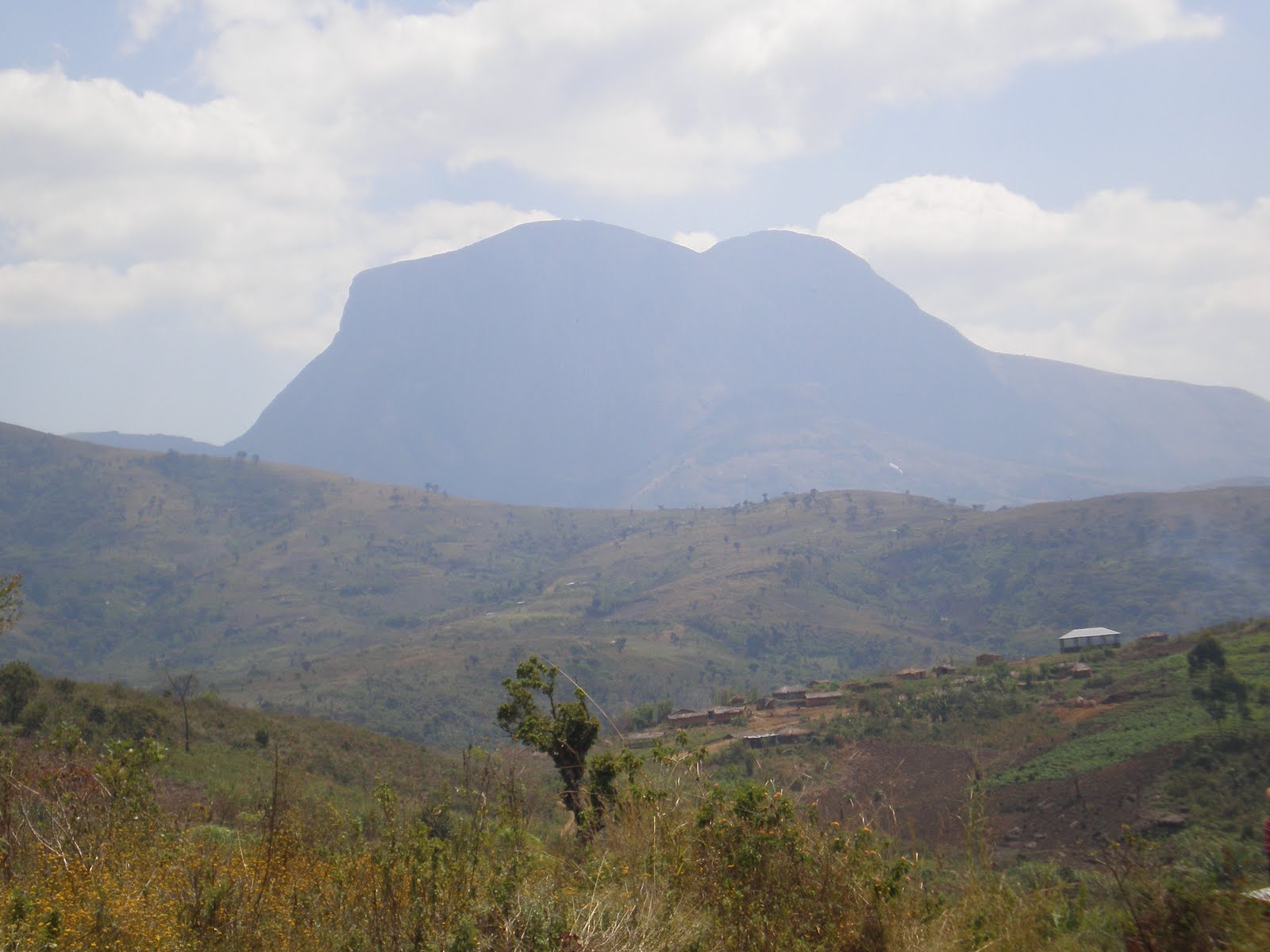
We climbed Mt. Namuli last weekend, Mozambique’s second highest mountain, at about 2490 meters tall, which happens to be right in our district. But, seeing as it is only an insignificant 15 meters shorter than the highest peak, and the other peak, though technically sitting inside Mozambique, can only be climbed by starting across the Zimbabwe border and Peace Corps has forbidden us PCVs from going into Zimbabwe during our service, I am going to go out on a limb and say I climbed the most accessible, tallest peak in the country. And it was hard. Damn difficult. So pouco a pouco we went.

It takes a day of walking to reach the base of the mountain, way out in the bush, past a diminishing number of brick/mud houses with straw roofs, children yelling at the white people, and family machambas (fields of crops like tomatoes and greens) as you get farther and farther from the city. But the views are absolutely stunning, reaffirming that I will bet anyone that I live in Mozambique’s most beautiful district. 8 hours into literally the middle of nowhere is where the queen of the mountain lives. Apparently, being the queen of the mountain is an inherited position. Once you arrive, you have to greet the queen, and bring her an offering, and then she will cook you dinner, let you stay on an esteira (reed mat) at her “compound,” and perform a ceremony to ask the spirits to allow you safe passage up the mountain. So an offering we brought. It included 2 kilograms of corn flour, a half liter of oil, a big ‘ole bag of gross dried fish, and a bottle of whiskey. Oh. And also 500 meticais a person. Apparently, though we brought exactly what our guide told us to bring, she was a slightly unhappy. Royalty… She then uses the goods in the ceremony and for your meals. So for two days I ate xima (Mozambican corn mush) and stayed away from the dried fish.

We spent the afternoon making faces and playing with the hoards of kids around, and inevitably, ogling the majestic mountain in front of us, that stared us in the face, as if to say, “Yes, I am freakin’ tall, and you signed up to climb me…idiots.”  The queen, who is also the chefe de localidade (mayor-ish person of this particular area of Mozambican bush), is relatively nice and friendly, and has about 10 houses in her little compound. They are all brick/mud with straw roofs. And there are tons of women of all ages, and children ambling around. But in the two days I was there, I saw no men. Our philosophy is that the young men are sent to the city to stay in the dorms to go to the nearest secondary school (an 8 hour stroll away), and the older men either don’t come back except to make more and more babies, or were working the fields all day. But we really didn’t quite get it and weren’t really sure what the gender politics were.

The next day, the queen performed a rather uneventful and unimpressive ceremony with some corn meal and whiskey to grant us permission to go up the mountain (I think my expectations were way too high), after which, she introduced us to the man that was to guide us up the mountain. And then off we went. And I almost did not make it. Obviously, there are no trails or switchbacks. You are literally climbing a rock face, at many times using your hands to pull yourself up using jutting rocks or a short reedy plant as leverage. And then on the way down, we often crab walked and slid on our butts it was so steep. The perils of the process definitely crossed my mind more than once. But as slow-going as it was, we made it. Oh, and the queen’s guide basically ran up the mountain in flip-flops. Thanks for the shot of confidence, man.

And the third day, we walked the eight hours home, this time past an increasingly denser population as we returned to the city. Though densely populated is probably misleading. At one point, about 5 hours from the city, we talked to a few kids who had screamed and ran to us from their machamba. We asked if they went to school, and they promptly told us that there isn’t one there for them to go to. There was a primary school near where the queen lives, but that is over 3 hours away, a bit of a daily commute for a 7 year old, who also has machamba, water-fetching, and of course, your general playing duties everyday. And there was also a primary school about 2 hours from the city, again about 3 hours away. We had, just by chance, come upon some kids who truly exemplified the main problem and massive conundrum of the Mozambican bush. These particular kids live 3 hours from the nearest primary school (which are free and ostensibly accessible for all children), smack in the middle of the two nearest ones, and so they can’t conceivably go. I kept on walking after that with an added twinge in my heart.

But, I was able to cross something off my Mozambique bucket list. As I will be the sole Gurué district volunteer next year, I had to represent and conquer the mountain. And seeing as the mountain is visible on clear days when I walk to my new school in the morning, it was just going to stare me in the face everyday, asking to be climbed. So climb we did.
 And the walking begins...

 Mt. Namuli in all it's majesty

 Our feast (eggs, fish, and xima)

Our accomodations 

Finally at the top! With our guides Avelino and Celestinho 

And Happy Lusaka Accords Day everyone! Yes, this week in Mozambique, we are celebrating the day when the Portuguese colonists and FRELIMO, the main Mozambican political party, signed an agreement that the governing of Mozambican would be turned over to Mozambicans after a transition period. Oh, and the inexorable war for independence that ensued soon after.